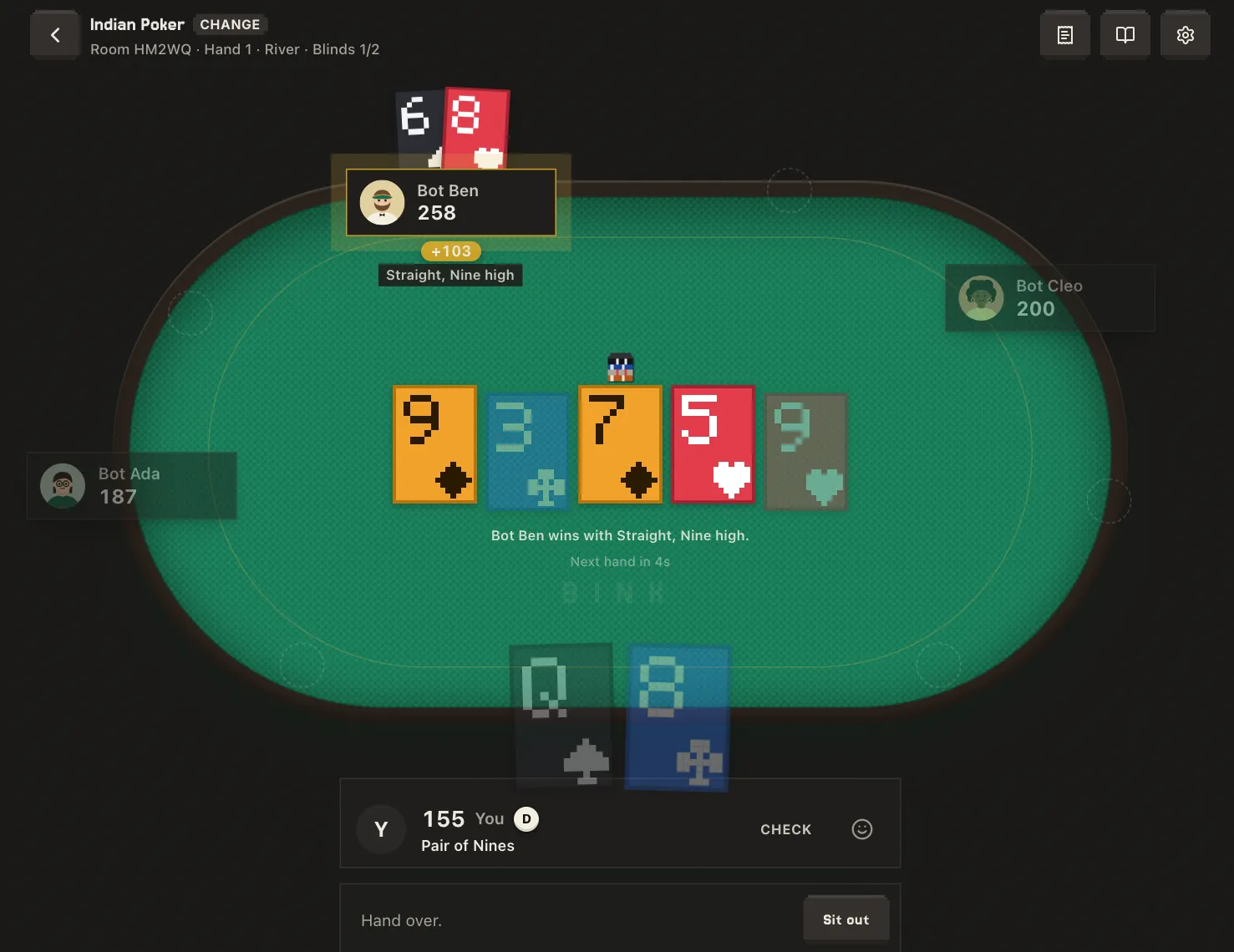
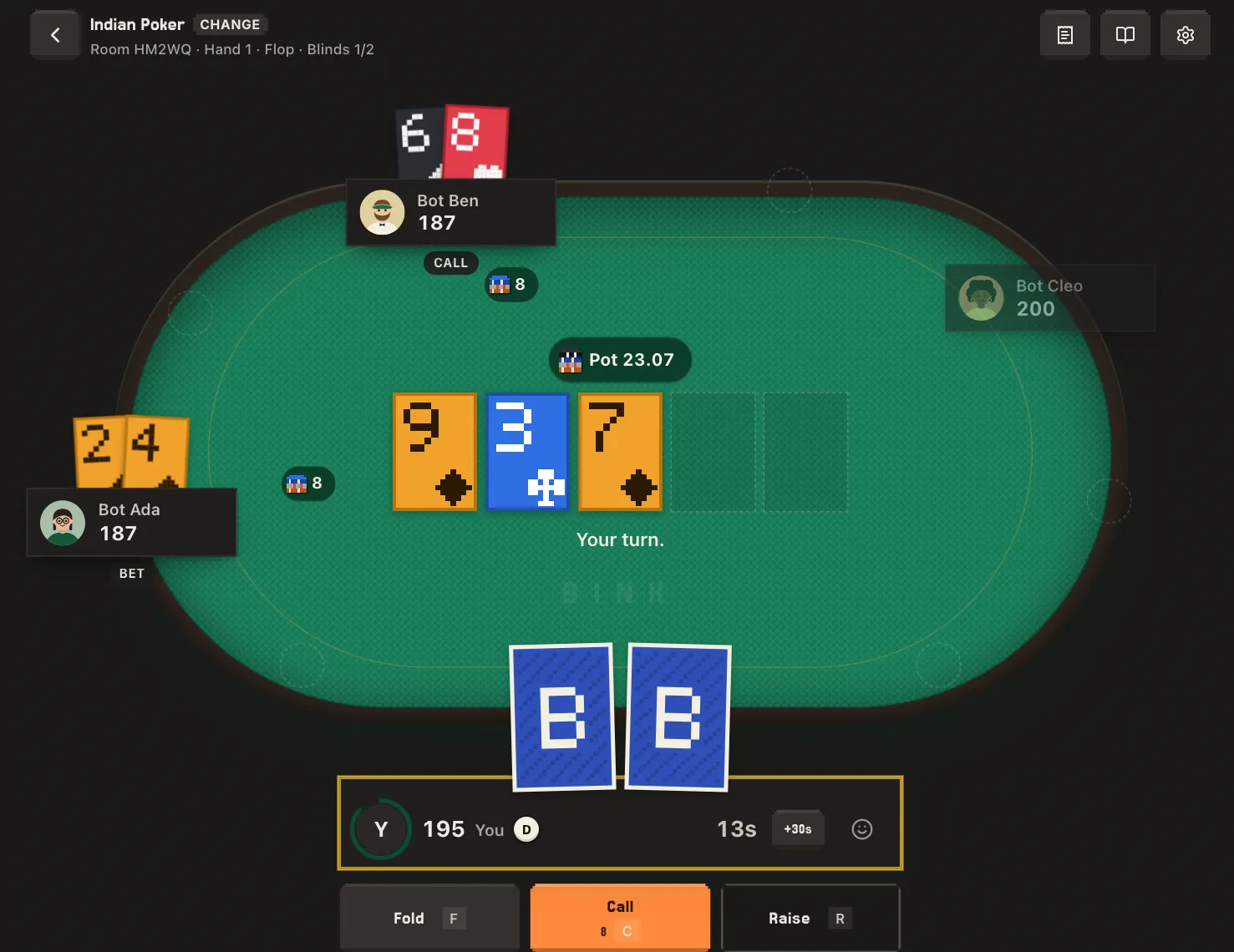
Indian Poker, also called Blind Man's Bluff, turns poker inside out: you can see everyone's cards except your own. Your cards are held up on your forehead, so the whole table knows what you have, and you have to work it out from how they bet.
How a hand plays
- Blinds. The small and big blind post as in Hold'em.
- Two cards each, on your forehead. You can't see your own cards. Everyone else can.
- Preflop betting. A round of no-limit betting.
- Flop, turn and river. Five board cards in the usual order, with betting after each.
- Showdown. Everyone finds out what they had. Best five cards from your two and the board wins.
Reading yourself from the table
The skill in Indian Poker is reading other people's reactions to your cards.
- If everyone folds to your raise, they might be looking at aces on your head.
- If someone bets big into you, they probably think your cards are weak.
- Your own read of their cards is perfect. You know exactly what everyone else holds, so you know which of them is ahead of the others.
An example hand
You can see your opponent holds K♣ K♥, which makes three kings with the board. You can't see your own cards. They bet the pot. Unless you hold the case king or a straight draw, you're behind, and their confidence tells you they can see you don't have it. Folding is right, and you'll find out at the next showdown whether they were bluffing.
Tips
- Play the player, not your cards. You have no cards to play. Everything you know about your hand comes from the others.
- Bluff with your face. Act worried when you're sure the table is scared of your cards.
- Watch the strongest hand you can see. If one opponent has a monster, you're likely behind them unless the others are acting scared of you.
Play it
Play Indian Poker on Bink, for play money. Bink hides your own cards from you and shows them to everyone else, so nobody has to hold a card to their forehead.